Hindustani Classical Music: A Beginner's Complete Guide

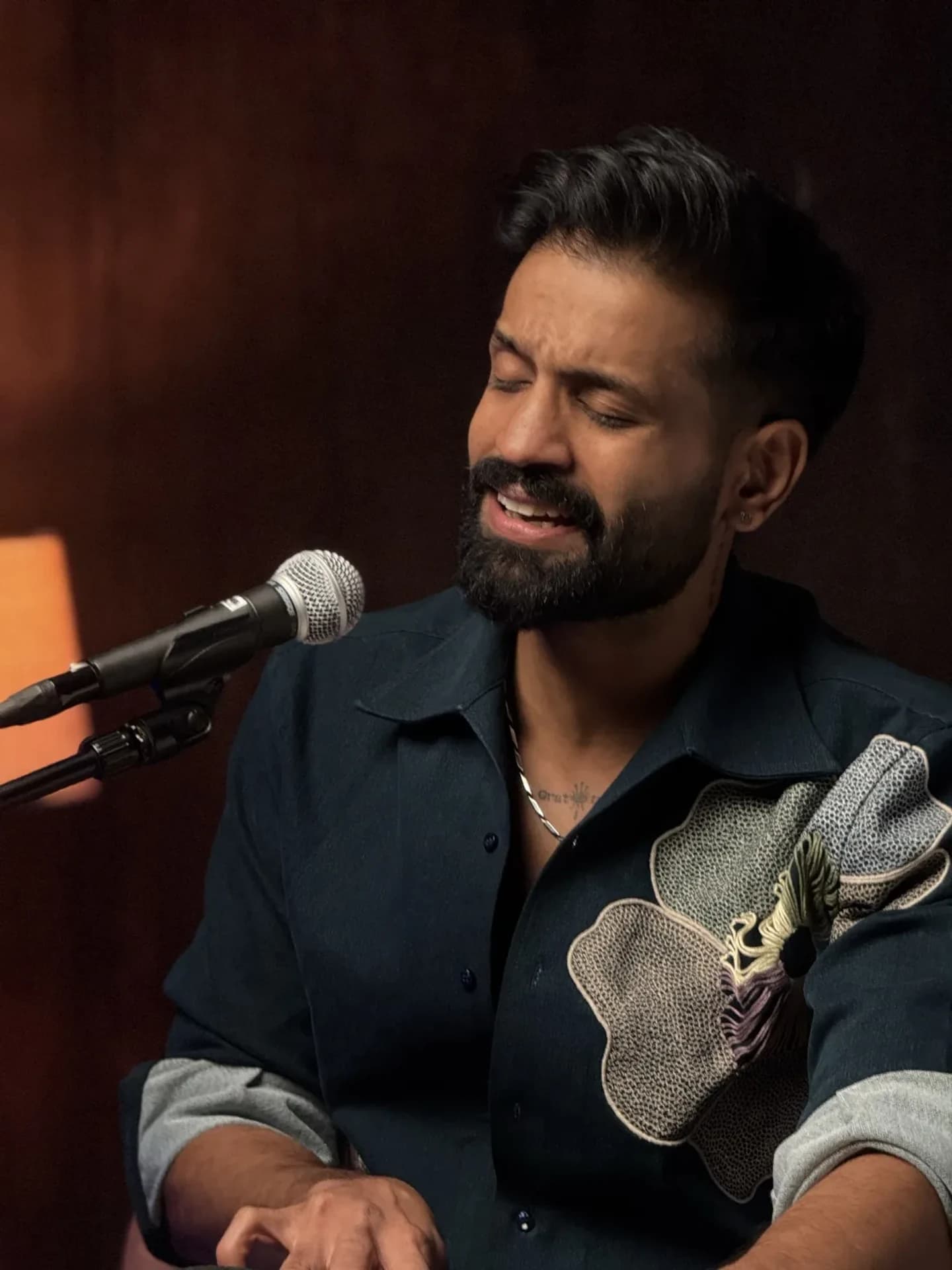
Hindustani classical music is one of the oldest continuous musical traditions in the world. Its roots stretch back over 2,000 years through the Sama Veda, its modern form crystallized over the past 700 years through court patronage and gharana lineages, and today it remains a living art practiced by millions across India, Pakistan, Bangladesh, and the global diaspora. This guide is the introduction we wish every new student received before walking into their first lesson — written from inside the tradition by working vocal coaches in Jaipur who teach Hindustani classical to beginners every week.
What Hindustani Classical Music Actually Is
Most newcomers expect Hindustani classical to be either "boring religious chanting" or "complicated to the point of inaccessibility." Both stereotypes are wrong. At its core, Hindustani classical is a system of structured improvisation built on two pillars: raga (a melodic framework defining which notes are allowed and how they relate) and taal (a rhythmic cycle of fixed length). Within these constraints, performers improvise — exploring the emotional possibilities of the raga across hours of performance. No two performances are ever the same, even of the same raga by the same musician.
This is what makes Hindustani classical genuinely thrilling once you understand it: a Khayal performance of Raga Yaman at 8 PM is a one-time event that has never happened before and will never happen again in exactly that way. The musician is composing in real time, drawing from decades of training, intuition, and the energy of the audience.
Compare this to most other musical traditions, where compositions are fixed and performances are interpretations. Hindustani classical inverts this: the raga is the source code, every performance is a fresh compilation.
The Two Major Indian Classical Systems
India has two distinct classical traditions, often confused by outsiders:
Hindustani classical (North India): Influenced by Persian, Central Asian, and Mughal traditions. Emphasizes melodic improvisation (vistaar) over long time spans. Uses tanpura, tabla, sarangi, harmonium, sitar, sarod, bansuri. Major forms: Khayal, Dhrupad, Thumri, Ghazal, Tarana. Geographic spread: North, Central, West, East India.
Carnatic classical (South India): Maintained closer continuity with ancient Sanskrit-Tamil traditions, less foreign influence. Emphasizes composed pieces (kritis) with structured improvisation. Uses tanpura, mridangam, ghatam, violin, veena, flute. Geographic spread: Tamil Nadu, Karnataka, Andhra Pradesh, Kerala.
This guide focuses on Hindustani. Both systems share the same 22-shruti foundation but evolved different repertoires, ornamentation styles, and performance practices.
The Basics: Swaras (Notes) and the 22 Shrutis
Hindustani uses seven main notes — Sa, Re, Ga, Ma, Pa, Dha, Ni — equivalent to Western Do-Re-Mi-Fa-Sol-La-Ti. But each note (except Sa and Pa) has multiple variants:
- Sa (Shadja) — always pure, the tonic
- Re (Rishabh) — pure (shuddh) or flat (komal)
- Ga (Gandhar) — pure or flat (komal)
- Ma (Madhyam) — pure or sharp (tivra)
- Pa (Pancham) — always pure, the perfect fifth
- Dha (Dhaivat) — pure or flat (komal)
- Ni (Nishad) — pure or flat (komal)
This gives 12 distinct notes — same as Western chromatic scale. But Indian classical recognizes 22 microtones (shrutis) between Sa and the next Sa, allowing for subtle expressive ornamentation that Western tuning cannot replicate. A skilled Hindustani singer can sit "between" two adjacent shrutis to create emotional tension — a flexibility 12-note Western music simply doesn't have.
What a Raga Actually Is
A raga is much more than a scale. It's defined by:
- Aroha: Ascending note sequence (e.g., Sa Re Ga Ma Pa Dha Ni Sa)
- Avaroha: Descending note sequence (often different from ascending — asymmetry is central to raga character)
- Vadi: The "king" note — most emphasized note in the raga
- Samvadi: The "minister" note — second most emphasized
- Pakad: Characteristic phrases that immediately identify the raga to trained listeners
- Time of day: Each raga is associated with a specific time (morning, evening, late night) — not arbitrary, but rooted in centuries of observation about which notes feel right at which times
- Rasa: Emotional essence (joy, longing, devotion, peace, valor, etc.)
- Chalan: The way phrases move — angular, smooth, ornament-heavy, etc.
Two ragas can have the exact same set of notes but be completely different. Yaman and Yaman Kalyan share notes but differ in pakad and emphasis. Raga Bhupali and Raga Deshkar use the identical five notes (S R G P D) but the way they're approached creates entirely different emotional landscapes.
The Ten Thaats (Scale Families)
To organize hundreds of ragas, Pandit V.N. Bhatkhande in the early 20th century classified them into 10 parent scales called thaats:
- Bilawal — like Western major scale (all natural notes)
- Kalyan — Bilawal with tivra Ma (sharp 4th) — produces Raga Yaman
- Khamaj — Bilawal with komal Ni (flat 7th)
- Bhairav — komal Re and komal Dha — devotional morning raga
- Bhairavi — all komal swaras (R G D N) — most beloved evening raga, used to end concerts
- Asavari — komal Ga, Dha, Ni — sad, melancholic
- Todi — komal Re, Ga, Dha + tivra Ma — early morning, intense
- Purvi — komal Re, Dha + tivra Ma — sunset
- Marwa — komal Re + tivra Ma, omits Pa — twilight, mysterious
- Kafi — komal Ga and Ni — like Western Dorian mode, used in folk and Bollywood
Hundreds of ragas branch from these 10 parents. Bhupali comes from Kalyan thaat. Malkauns comes from Bhairavi thaat. Once you know the thaats, you can quickly understand any new raga's basic character.
What a Taal Actually Is
Taal is the rhythmic cycle. Each taal has:
- Matras: Number of beats (Teentaal has 16, Ektaal has 12, Jhaptaal has 10, Rupak has 7)
- Vibhag: How the beats are grouped (Teentaal: 4+4+4+4; Jhaptaal: 2+3+2+3)
- Sam: Beat 1 — the most important beat, where melodic phrases resolve
- Khali: "Empty" beats where the tabla plays softer sounds (Tin, Na)
- Bhari: "Full" beats where the tabla plays strong bass strokes (Dha, Dhin)
- Theka: The basic pattern of bols (syllables) played in one cycle
The 40+ taals in Hindustani classical each have unique feel. Teentaal feels expansive and elegant. Ektaal feels stately and ceremonial. Jhaptaal feels balanced and meditative. Rupak feels asymmetric and modern. Beginners typically start with Teentaal (16 beats) for classical and Keherwa (8 beats) for semi-classical.
Practice taals using our free online tabla machine which includes all 40 traditional taals at any tempo.
The Major Performance Forms
Dhrupad: The oldest and most austere form, dating back to the 13th century. Slow, meditative, deeply spiritual. Uses pakhawaj (an ancient drum) instead of tabla. Major exponents: Dagar Brothers, Gundecha Brothers.
Khayal: The most popular vocal form today. Developed in the Mughal courts in the 18th century. More ornamental and improvisation-heavy than Dhrupad. Two compositions are sung per raga: a slow vilambit khayal and a faster drut khayal. Major exponents: Pt. Bhimsen Joshi, Ustad Bade Ghulam Ali Khan, Kishori Amonkar.
Thumri: A semi-classical light form, often romantic. More flexibility in raga rules. Popular at concerts as the second-half lighter offering. Major exponents: Begum Akhtar, Girija Devi.
Ghazal: Urdu poetry sung in semi-classical style. Less raga-bound, more lyric-focused. Major exponents: Mehdi Hassan, Jagjit Singh, Begum Akhtar.
Tarana: A fast composition using rhythmic syllables (Tana, Dere Na, etc.) instead of words. Demonstrates the singer's technical agility.
Bhajan / Kirtan: Devotional songs in raga structure. The accessible entry point for many learners.
The Gharana System
For 200+ years, Hindustani classical knowledge was transmitted through gharanas (literally "houses") — family or stylistic lineages where masters trained disciples through years of direct contact. Major vocal gharanas include:
- Gwalior Gharana: The oldest, most traditional. Foundation of all other gharanas. Emphasis on clear, unornamented presentation.
- Jaipur-Atrauli Gharana: Known for rare ragas, complex laykari (rhythm work), and the legacy of Ustad Alladiya Khan and Kesarbai Kerkar.
- Patiala Gharana: Romantic, ornamented style. Major exponent: Ustad Bade Ghulam Ali Khan.
- Kirana Gharana: Slow, contemplative, emotionally rich. Pt. Bhimsen Joshi's gharana.
- Agra Gharana: Powerful, dhrupad-influenced style. Strong rhythmic work.
- Mewati Gharana: Pt. Jasraj's gharana. Devotional emphasis, broad ranges.
Today, gharana boundaries have blurred — many singers train under multiple gurus and develop personal hybrid styles. But understanding gharanas helps you appreciate stylistic differences when listening to different artists.
The Riyaaz System: How Classical Singers Actually Train
Riyaaz (daily practice) is not optional in Hindustani classical — it's the foundation. A typical student schedule:
- 5:00-7:00 AM: Voice opening with tanpura, hold long Sa, basic aalankar exercises
- 7:00-8:00 AM: One raga study — alaap, bandish, slow improvisation
- 3:00-5:00 PM: Second raga study OR composition practice
- 7:00-8:00 PM: Light classical practice (thumri, bhajan) OR listening to recordings
Top professionals practice 4-6 hours daily even after decades of training. Beginners can start with 30-45 minutes daily — consistency matters infinitely more than session length. Our Riyaaz Studio provides the tanpura + tabla combination needed for daily practice.
Choosing a Teacher (The Most Important Decision)
Hindustani classical cannot be self-taught beyond the very basics. You need a guru. Criteria for choosing one:
- Active performance career: A guru who performs publicly maintains higher standards than one who only teaches.
- Verifiable training lineage: Ask which gharana they trained in and under whom. Reputable teachers can trace their lineage 3-4 generations back.
- Genuine connection: You'll spend years with this person. Personality fit matters more than ego or fame.
- Reasonable fees: ₹2,000-5,000/month for weekly group classes is standard in tier-1 Indian cities. ₹500-1,500/month in smaller towns. Avoid teachers charging ₹10,000+/month unless they have a major international reputation.
- Available for real practice feedback: A good guru hears your daily practice mistakes and corrects them weekly, not monthly.
If you're in Jaipur, our music classes at 12NOTEZ include Hindustani vocal training with experienced gurus. We follow the traditional 1-on-1 and small group format that produces real progress.
The Realistic 10-Year Learning Roadmap
Years 1-2: Foundation
Learn the swaras. Master breath control. Practice tanpura tuning. Learn 5-7 simple bhajans in different ragas. Internalize Teentaal and Keherwa. Don't worry about performing yet.
Years 3-5: Repertoire Building
Learn 15-20 ragas. Practice both vilambit and drut khayals. Begin alaap improvisation in 5-6 ragas. Master 3-4 taals. Begin small public performances (school events, family gatherings, online).
Years 6-8: Stylistic Development
Settle into one gharana style. Develop personal voice within tradition. Begin tappa, tarana, and other advanced forms. Perform at community concerts. Possibly compete in talent shows.
Years 9-10+: Performer Level
Public performance becomes routine. Begin teaching others. Develop original presentations of traditional ragas. Optionally pursue All India Radio empanelment (the official Indian classical performer certification).
Years 15-20+: Mastery
True mastery of Hindustani classical takes 20+ years of daily dedication. There's no shortcut. Pandit Bhimsen Joshi famously said he was still learning at 80.
How to Listen to Hindustani Classical (For Beginners)
Most beginners find Hindustani classical inaccessible because they don't know what to listen for. Try this progression:
- Start with light classical: Begum Akhtar's thumris, Jagjit Singh's ghazals, Pt. Ajoy Chakrabarty's bhajans. These have melodies you can hum.
- Move to short khayals: Pt. Bhimsen Joshi's "Raga Yaman" (30 min), Kishori Amonkar's "Raga Bhinna Shadja". Listen actively, follow the alaap.
- Try instrumentals: Pt. Ravi Shankar's sitar, Ustad Bismillah Khan's shehnai. Often more accessible than vocal music for new listeners.
- Then full concerts: 2-3 hour Khayal performances. Now you can appreciate the slow development and the moment of arrival on the sam.
Common Misconceptions About Hindustani Classical
- "It's all religious." False. Many ragas are religious; many are not. Khamaj is romantic. Pahari is folk-derived. Hindustani classical encompasses a vast emotional spectrum.
- "You need a perfect voice to start." False. Most beginners don't have great voices. Riyaaz builds them. Lata Mangeshkar's early recordings show how much her voice developed through practice.
- "It's for old people only." False. The largest growing audience for Hindustani classical is 18-35 year olds, often discovering it through fusion artists like Anandi Bhattacharya, Aditya Prakash, and the Manganiyar Seduction.
- "It takes a lifetime to learn." Partly true. Mastery takes 20+ years. But you can sing recognizable bhajans and small khayals after 2 years of focused training.
- "You have to be Hindu/Indian to learn." False. Many of the greatest Hindustani classical musicians have been Muslim (Ustad Bismillah Khan, Bade Ghulam Ali Khan). Several Western students are now respected Hindustani performers.
The Future of Hindustani Classical
Hindustani classical is undergoing a quiet revival. Spotify and YouTube have made the world's greatest performances freely available. Young musicians like Kaushiki Chakrabarty, Pt. Sanjeev Abhyankar, and Mahesh Kale are reaching global audiences. Fusion projects with jazz, electronic, and Western classical music are opening new aesthetic territory while respecting tradition.
If you're considering learning Hindustani classical in 2026, you're entering at a uniquely vibrant moment. The tradition is 2,000 years old and somehow still feels fresh. Start today.
Conclusion: Begin With One Hour Tomorrow Morning
Reading about Hindustani classical doesn't teach you Hindustani classical. The only way to learn is to start doing it. Tomorrow morning at 6 AM, sit cross-legged with a straight spine. Open our free online tanpura. Set it to a comfortable Sa. Hum that Sa for 10 minutes. That's your first riyaaz session.
Tomorrow's tomorrow morning, do it again. After 30 days, find a guru. After 6 months, you'll start hearing ragas differently when others sing them. After 2 years, you'll be singing recognizable bandishes. After 10 years, you'll be teaching others. That's how every Hindustani classical musician — from Tansen to Pandit Bhimsen Joshi to your future teacher — began.
The tradition is open. The doors are wide. All it takes is showing up tomorrow morning.
Frequently Asked Questions About Learning Hindustani Classical
Q: What's the best age to start learning Hindustani classical? Earlier is better, but it's never too late. Most professional Hindustani vocalists started between ages 5 and 12. Adult beginners (25+) can absolutely learn and perform — they may not reach professional level by age 40, but serious amateur skill is fully achievable.
Q: Can I learn Hindustani classical without learning Sanskrit or Hindi? Yes. The technical vocabulary (swaras, ragas, taals) takes a few months to absorb. Compositions often use Sanskrit and Urdu, but you don't need to be fluent — you learn each piece phonetically and gradually understand the meaning.
Q: Do I need to buy a harmonium or tanpura to start? No. Begin with our free online tanpura for daily practice. After 6-12 months of serious training, invest in a real instrument — wooden tanpura (₹15,000-25,000) or harmonium (₹8,000-30,000).
Q: How long until I can perform publicly? Small informal performances (family events, online): 2-3 years of training. Community concerts: 5-7 years. All India Radio / professional concerts: 10+ years. Note that "performance ready" varies massively by context — a 2-year student can credibly sing a bhajan at a temple gathering.
Q: Is Carnatic easier or harder than Hindustani? Different, not easier or harder. Carnatic has more rigid composition structures (easier to start, harder to master fully). Hindustani has more open improvisation (harder to start, infinite mastery depth). Choose based on what music you actually love listening to.
Q: Can I learn Hindustani classical from YouTube alone? You can learn theoretical concepts and observe great performances. You cannot learn the physical voice production, microtonal accuracy, or improvisation skills without a teacher's real-time feedback. Use YouTube as supplement, not replacement.
Q: What if I'm not "naturally" musical? The vast majority of professional Hindustani classical musicians don't have "natural" talent in the dramatic Western sense. They have decades of trained practice. Pitch accuracy, voice control, ear training, rhythm — these are all trainable skills. Start where you are.
Recommended Listening for Your Hindustani Classical Journey
To develop your ear and appreciation, listen to these performances in order over your first year:
- Pt. Bhimsen Joshi — "Raga Marwa" (any concert recording)
- Kishori Amonkar — "Raga Bhinna Shadja" (her Pune concert recording)
- Ustad Bismillah Khan — Shehnai recordings from Banaras
- Pt. Ravi Shankar — "Raga Yaman Kalyan" (any 30+ minute version)
- Begum Akhtar — Thumri collection (especially "Aaj Jane Ki Zid Na Karo")
- Pt. Hariprasad Chaurasia — Bansuri recordings of Raga Hansadhwani
- Ustad Vilayat Khan — "Raga Bhairavi" (sitar)
- Kaushiki Chakrabarty — recent recordings showcasing modern Hindustani
- Mahesh Kale — devotional and classical fusion recordings
- Pt. Jasraj — "Mata Kalika" and Mewati Gharana classics
Listen actively. Don't have it as background music. Sit with attention. Try to identify when the alaap ends and the bandish begins. Notice when the tabla joins. Feel the moment the singer lands on sam. This active listening trains your ear faster than anything else.
Conclusion: A 2,000-Year-Old Tradition Awaits
Hindustani classical music is one of humanity's great cultural inheritances. It survived Mughal courts, British colonial suppression, the dominance of film music, and the streaming revolution. In 2026, it continues to evolve while remaining recognizably itself. Whether you become a professional performer, a serious amateur, or just an informed listener, time spent with Hindustani classical music is time invested in something genuine and lasting.
If you're in Jaipur, visit us at 12NOTEZ Music Studio for Hindustani vocal lessons with qualified teachers. If you're elsewhere, use our free Riyaaz Studio for daily practice and find a local guru. The tradition is open. The doors are wide. Begin tomorrow morning.
Frequently Asked Questions
How long does it take to learn Hindustani classical music from scratch?
Most students can sing simple compositions in a raga within 3–6 months of consistent daily practice (30–45 minutes). Reaching a stage-worthy performance level typically takes 5–7 years with a qualified guru. The tradition is deliberately gradual — each raga is absorbed over weeks or months, not days. There is no shortcut, but the journey itself is deeply rewarding from the very first lesson.
Can I learn Hindustani classical music online?
Online learning works well for theory — understanding raga grammar, tala cycles, and notation. For actual performance technique, an in-person guru is strongly preferred. The guru-shishya relationship involves real-time correction of minute details in breath, tone placement, and ornamentation that video cannot convey. Platforms like SwarGanga and Musicality.in offer structured online courses as a supplement to live lessons, not a replacement.
What is the difference between Hindustani and Carnatic classical music?
Hindustani classical music developed in North India with Persian and Mughal influences, uses ragas extensively in improvised alaap, and employs instruments like sitar, sarod, and tabla. Carnatic classical music comes from South India, has a more rigid compositional structure, uses more complex rhythmic patterns (tala systems), and features instruments like veena, mridangam, and violin. Both share ancient roots in the Natya Shastra but diverged around the 13th century.
Which raga should a beginner learn first?
Raga Yaman is the near-universal starting point for Hindustani beginners — it uses all sharp notes (teevra Ma), has a clear and beautiful melodic personality, and is active at dusk making it practical for evening practice sessions. Bhairavi (the "queen of ragas") is often the second raga taught. Your guru will ultimately decide based on your voice type and natural inclinations.