Mixing Bollywood Vocals: A Step-by-Step Guide for Indian Musicians
Introduction to Mixing Bollywood Vocals
Mixing vocals is a crucial step in music production, and when it comes to Bollywood songs, it requires a unique approach. The Indian music industry is known for its rich, melodic vocals, and to make your tracks stand out, you need to know how to mix Bollywood vocals effectively. In this blog post, we will guide you through the step-by-step process of mixing Bollywood vocals at home, providing you with valuable tips and recommendations on equipment and software. Whether you are a singer, producer, or musician, this guide will help you achieve professional-sounding vocal mixes for your Hindi songs.
At 12NOTEZ Music Studio Jaipur, we have worked with numerous artists and producers, and we understand the importance of high-quality vocal mixes in Indian music production. With the right techniques and tools, you can create stunning vocal mixes that rival those of professional studios. So, let's dive into the process of mixing Bollywood vocals and explore the best practices for achieving exceptional results.
Preparing Your Vocal Tracks
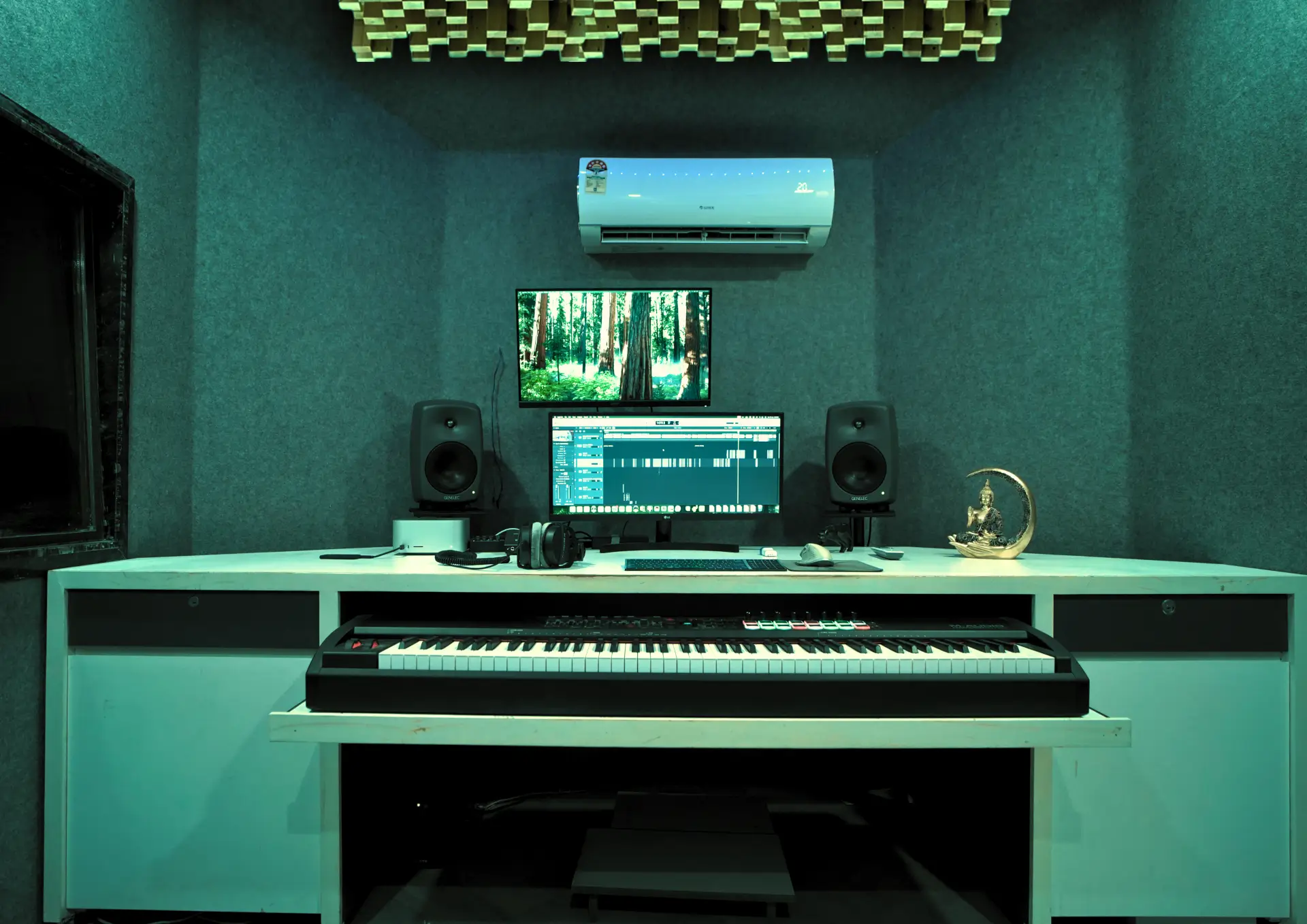
Before you start mixing, it's essential to prepare your vocal tracks. This includes editing, comping, and tuning your vocals. Invest in a good digital audio workstation (DAW) like Ableton Live or Logic Pro X, which offer a range of tools and plugins for vocal editing and processing. For example, you can use the music production services at a professional studio like 12NOTEZ Music Studio Jaipur to get your vocals recorded and edited by experienced engineers.
When it comes to equipment, you'll need a good pair of monitor speakers, such as the KRK RP5 G3 (₹25,000 - ₹30,000), and a reliable audio interface, like the Focusrite Scarlett 2i2 (₹13,000 - ₹15,000). These will help you accurately monitor and record your vocals.
Step-by-Step Process for Mixing Bollywood Vocals
Here's a step-by-step guide to mixing Bollywood vocals:
- Start by creating a new project in your DAW and importing your vocal tracks. Make sure to organize your tracks and label them clearly for easy navigation.
- Adjust the gain levels of your vocal tracks to optimal levels, usually around -18 dB to -12 dB. This will give you enough headroom for processing and mixing.
- Apply a high-pass filter (HPF) to remove low-frequency rumble and hum. A cutoff frequency of around 80 Hz to 100 Hz is suitable for most vocal tracks.
- Use a compressor to control the dynamic range of your vocals. A ratio of 3:1 to 5:1 and a threshold of -20 dB to -15 dB are good starting points. You can use a plugin like the Waves C6 (₹23,000 - ₹25,000) or the FabFilter Pro-C2 (₹15,000 - ₹18,000).
- Add a de-esser to reduce excessive sibilance (harsh 's' and 't' sounds). A threshold of -20 dB to -15 dB and a frequency range of 5 kHz to 10 kHz are suitable for most vocal tracks.
- Use a stereo widener to enhance the spatiality of your vocals. Be cautious not to overdo it, as this can introduce phase issues. The iZotope Imagine (₹10,000 - ₹12,000) is a great plugin for this purpose.
- Apply a limiter to prevent your vocals from exceeding 0 dB and causing distortion. A threshold of -0.5 dB to -0.1 dB and a release time of 10 ms to 30 ms are good starting points.
- Finally, use a mastering EQ to make any final tone adjustments to your vocals. A gentle boost in the high-frequency range (5 kHz to 10 kHz) can help add clarity and definition.
Tips for Mixing Indian Classical Vocals
Mixing Indian classical vocals requires a unique approach, as these vocals often feature intricate ornaments and subtle expressiveness. Here are some tips to keep in mind:
- Use a more subtle approach to compression, as Indian classical vocals often require a more dynamic range. A ratio of 2:1 to 3:1 and a threshold of -25 dB to -20 dB are good starting points.
- Pay attention to the tone and timbre of the vocal, as Indian classical music often features distinctive vocal characteristics. Use EQ to enhance the natural tone of the vocal, rather than trying to change it drastically.
- Use a stereo widener with caution, as Indian classical vocals often feature a more intimate, centered soundstage. A subtle widening of 10% to 20% can help enhance the spatiality without introducing phase issues.
Conclusion
Mixing Bollywood vocals requires a deep understanding of Indian music and the techniques involved in creating professional-sounding vocal mixes. By following the step-by-step guide outlined in this article, you can achieve stunning vocal mixes that rival those of professional studios. Remember to invest in good equipment, such as monitor speakers and an audio interface, and to use high-quality plugins and software. With practice and patience, you can master the art of mixing Bollywood vocals and take your music production to the next level.