Guitar Expert in 30 Days: A Realistic Practice Plan
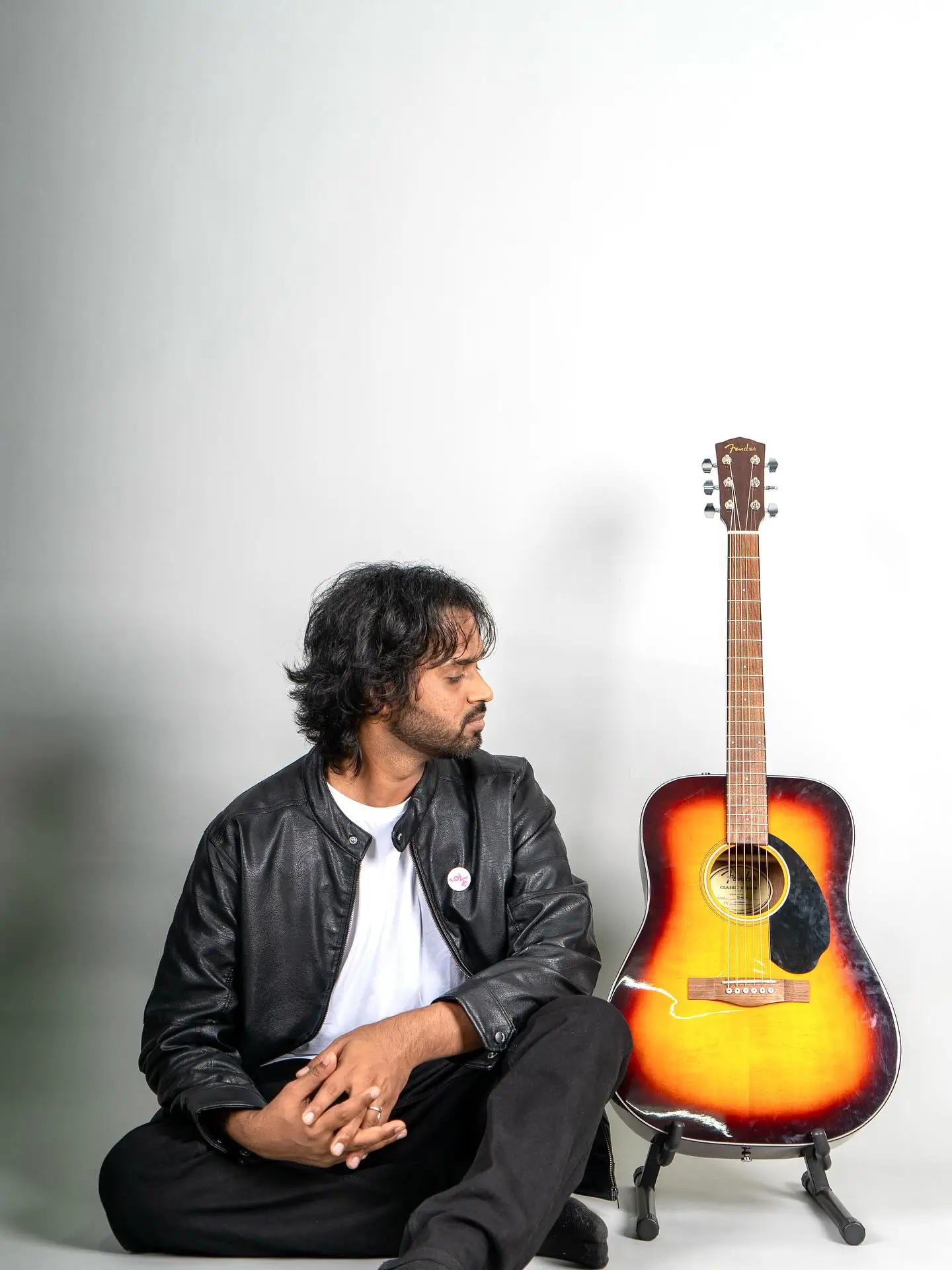

Can you really become good at guitar in just 30 days? The honest answer is: you won't become a master in a month — nobody does. But with the right approach, you can absolutely go from zero to confidently playing songs in one month. The key is structured daily practice, smart song choices, and avoiding the common detours that waste beginners' time. Here's a realistic, day-by-day plan that actually works.
This isn't a marketing claim. We've put hundreds of students through 30-day intensive blocks at 12Notez Music Academy Jaipur, and the path below is what actually delivers results. Stick to it for thirty days and you'll surprise yourself.
Before You Start: The Setup
Spend the day before Day 1 getting the fundamentals right:
- Choose a comfortable acoustic guitar with light-gauge strings — heavy strings discourage beginners
- Buy a clip-on tuner (₹500) and a metronome app (free)
- Find a quiet practice space and commit to a daily time slot — same time every day
- Set up a phone tripod so you can film yourself (this matters more than you think)
- Make a playlist of 5 songs you want to learn, ranked easiest to hardest

Week 1: The Foundation (Days 1–7)
Goal: build the physical habits that everything else depends on.
- Day 1–2: Learn to hold the guitar properly, finger placement, and basic posture. Practice "spider" finger exercises across the fretboard for 10 minutes.
- Day 3–4: Learn your first 3 chords — Em, C, and G. Play each chord 50 times, focusing on clean ringing notes.
- Day 5: Practice switching between Em and C smoothly. Aim for 60 changes in one minute by the end of the day.
- Day 6: Learn the basic down strumming pattern (D-D-D-D) at 60 BPM with a metronome.
- Day 7: Play your first song using just Em and C. "Knockin' on Heaven's Door" or "Tum Hi Ho" simplified versions both work.
Week 1 Practice Tip
Your fingertips will hurt. This is normal. Don't push through pain to the point of skin damage — practice in two short sessions per day instead of one long one. The calluses you build in week one save you from blisters in week two.
Week 2: Building Speed (Days 8–14)
Goal: expand your chord vocabulary and start playing real songs.
- Day 8–9: Add D and Am chords to your vocabulary. Practice all five chords (G, C, D, Em, Am) in random sequences.
- Day 10–11: Learn 2 strumming patterns — the standard D-DU-UDU and the simpler D-DU pattern.
- Day 12: Practice chord changes with a metronome at 60 BPM, then 70, then 80. Don't push speed before accuracy.
- Day 13–14: Learn 3 songs using G, C, D, Em, Am. Suggestions: "Stand By Me", "Country Roads", "Pyaar Hota Kayi Baar Hai".
Week 2 Mindset Note
This is where most beginners quit. You'll feel like you're not progressing fast enough. Push through. Most students hit their first "click" moment around Day 11 — it'll happen for you too.

Week 3: Musical Expression (Days 15–21)
Goal: introduce techniques that transform you from a chord-strummer into a musician.
- Day 15–16: Learn the F chord — the dreaded barre chord. Don't try the full barre on Day 1; start with the mini-F (just the top 4 strings).
- Day 17–18: Fingerpicking basics — Travis picking pattern. Start slow, focus on independence between thumb and fingers.
- Day 19: Dynamic strumming — practice the same song soft and loud. Learn that volume is a creative tool.
- Day 20–21: Learn 3 more songs using your expanded chord vocabulary. Try one fingerpicked song.
The F Chord: Don't Panic
Most beginners think the F chord is impossible. It's not. Use the simplified version (just three strings) for week three, and graduate to the full barre F in week four. Many great guitarists used the simplified F for months before they could nail the barre. You're not behind.
Week 4: Performance Ready (Days 22–30)
Goal: turn your scattered skills into actual performances.
- Day 22–24: Polish all songs learned so far. Drill the transitions you keep messing up.
- Day 25–26: Learn to sing and play simultaneously. Start with songs whose strumming pattern is simple so the singing feels natural.
- Day 27–28: Record yourself playing your two best songs. Listen back. You'll hear things you didn't notice while playing.
- Day 29–30: Perform for family or close friends — your first informal "gig". Even an audience of two changes how you play.
Daily Practice Structure (20–30 Minutes)
Quality matters more than quantity. Here's a simple structure that works:
- 5 minutes — Warm-up: spider exercises, scales, or finger stretches
- 5 minutes — Chord changes: the boring drill that makes everything else possible
- 5 minutes — New material: today's lesson focus
- 10 minutes — Songs: play through what you know, focusing on transitions
- 5 minutes (optional) — record yourself or play with a metronome
Key Tips for 30-Day Success
- Practice at least 30 minutes every single day — consistency beats long sessions. Three hours on Sunday will not replace 30 minutes daily.
- Use a metronome from Day 1 — it builds timing, which is the single biggest separator between amateur and pro players
- Learn songs you love — motivation is the fuel. Don't grind through songs you hate just because a tutorial said to.
- Don't skip the basics trying to learn advanced stuff — barre chords come faster if you spent time on open chords first
- Film yourself weekly — your perception of your playing improves when you see it from outside
- Practice slowly — much slower than feels exciting. Speed comes after accuracy, never before.
- Tune before every session — playing on an out-of-tune guitar trains your ear to be tolerant of bad pitch
Common Mistakes That Slow You Down
Watching too many tutorials
YouTube is great for occasional reference, but if you spend more time watching than playing, you're making a mistake. The skill is in your hands, not your eyes.
Skipping warm-ups
Cold fingers are slow fingers. Five minutes of basic exercises makes the rest of the session twice as productive.
Buying gear instead of practicing
A new pedal won't make you a better player. Practice will.
Not playing along to records
Playing alone gives you bad time. Playing along to recordings forces you to lock in. Use it daily.
Looking at the fretboard constantly
Beginners stare at their hands. Try to play without looking — even for 10 seconds at a time. This dramatically speeds up muscle memory.
What to Realistically Expect at Day 30
You will be able to:
- Play 6–10 songs from memory using 7–9 chords
- Strum confidently in time with a metronome
- Sing and play simultaneously on at least one song
- Handle the F chord (simplified or full barre)
- Hold a basic Travis picking pattern on one or two songs
- Perform for friends without forgetting how to play
You will not be:
- Soloing like Jimi Hendrix
- Improvising fluently in any key
- Reading sheet music at sight
- Performing on a professional stage
Those goals are real, but they take more like 12–24 months of consistent practice. Day 30 is the foundation, not the finish line.
What Comes After Day 30
Once you've completed the 30-day plan, you have a choice: keep self-teaching (slower but cheaper) or join a structured class (faster, with feedback). Most students who continue alone plateau within 60–90 days because nobody catches their bad habits early.
Accelerate with 12Notez
A structured guitar class can compress months of self-learning into weeks. At 12Notez Music Academy Jaipur, our instructors guide you through a proven curriculum with personal feedback at every step — including catching the tiny technique errors that slow self-learners down. We offer both group and private formats.
Group classes start at ₹3,000/month. Private 1-on-1 from ₹5,000/month. First trial class is free. Call +91-9602195653 to start.
Frequently Asked Questions
Can you really learn guitar in 30 days?
You can learn to confidently play 5–10 songs and basic chord transitions in 30 days with 45 minutes of daily practice. You won't be a virtuoso, but you'll be past the painful beginner phase. True guitar mastery takes years — 30 days is about building a sustainable habit.
How many hours a day should I practice as a beginner?
30–60 minutes of focused practice beats 3 hours of unfocused noodling. Break it up: 10 min chord changes, 10 min picking, 10 min one song, 10 min ear training. Take Sundays off — your fingertips need recovery time, especially in the first month.
What guitar should a beginner buy in India?
For acoustic: Yamaha F310 (₹7,500) or Cort AD810 (₹9,000) — both have great playability. For electric: Yamaha Pacifica 012 (₹11,000) or Squier Affinity Stratocaster (₹13,000). Avoid no-brand guitars under ₹4,000 — they're often unplayable.
Do I need a teacher or can I self-learn?
Both work. Self-learners save money but typically take 2–3x longer to reach the same level. A teacher catches bad habits before they form (especially posture and finger placement). Even 4 weeks of formal lessons before going solo speeds things up dramatically.