The Art and Engineering of Audio Mixing & Mastering
In modern music production, the difference between a bedroom demo and a billboard hit lies in the post-production stage: Mixing and Mastering. It is the bridge between recording raw tracks and releasing a finished, commercially viable record. At 12Notez Music Studio Jaipur, we have mixed and mastered over 400 tracks for independent artists, OTT shows, and commercial releases. Whether you are producing hip-hop, indie folk, or classical fusion, understanding how this process works will elevate your creative output.
This guide breaks down our hybrid workflow, the technical standards required for digital distribution, and practical tips to prepare your projects for professional engineering.
1. The Audio Mixing Phase: Balancing the Multi-Tracks
Mixing is about organization, space, and emotion. When we receive your multi-track stems, our primary goal is to ensure every element has its own distinct space in the frequency spectrum, the stereo field, and the depth chart.
The Key Elements of a Professional Mix:
- Level and Panning (The Stereo Field): Placing instruments left-to-right to create a wide stereo image. We keep the lead vocals, kick drum, snare, and bass guitar down the center to maintain focus and solid low-end power.
- Equalization (Frequencies): Carving out overlapping frequencies. For example, high-passing guitars and vocals to leave room for the bass and kick drum, preventing a "muddy" low-mid build-up.
- Dynamics Control (Compression): Taming peak levels and bringing up quiet details. We use compression to make vocals sit tightly on top of the instrumentation and to give drums a chest-hitting punch.
- Time-Based Effects (Space): Using custom delays and reverbs to create a sense of front-to-back depth. This makes the mix sound three-dimensional rather than flat.
2. The Audio Mastering Phase: The Final Polish
Once the mix is finalized and bounced to a single stereo WAV file, it goes to the mastering stage. Mastering is about consistency. It ensures your song sounds tonally balanced and competitively loud on all systems — whether it's a smartphone speaker, car stereo, high-end studio monitor, or a massive club PA system.
Our Mastering Checklist:
- Surgical EQ: Making minor adjustments (usually less than 1.5dB) to balance the overall frequency response of the song.
- Multi-band Compression: Controlling specific frequency ranges (like taming a harsh high-mid area or tightening loose low frequencies) without affecting the rest of the song.
- Stereo Enhancing: Widening the high frequencies to make the master sound big and expensive.
- Limiting & Loudness: Maximizing the volume while preserving transient punch, ensuring the song meets digital distribution standards.
| Platform | Target Loudness | Peak Limit | Our Approach |
|---|---|---|---|
| Spotify | -14 LUFS | -1.0 dBTP | Dynamic, punchy master that won't trigger heavy compression. |
| Apple Music | -16 LUFS | -1.0 dBTP | High dynamic range master for clean reproduction on Apple devices. |
| YouTube | -14 LUFS | -1.0 dBTP | Optimized mid-range to cut through video codecs and normalizations. |
| Club / Festival | -9 to -7 LUFS | -0.1 dBTP | Maximum energy, tight low-end control for massive speakers. |
3. The Loudness Wars and LUFS: What You Need to Know
For decades, artists and labels pushed engineers to make their CDs as loud as possible. This was known as the "Loudness Wars." However, loud CDs achieved volume by destroying dynamic range — making the quiet parts as loud as the loud parts, resulting in ear fatigue.
In the streaming era, platforms use Loudness Normalization. Spotify scales all tracks to -14 LUFS. If you submit a track mastered at an extremely loud -7 LUFS, Spotify's algorithm will turn it down by 7dB. Because your track has no dynamic range and has been turned down, it will actually sound quieter and flatter than a track mastered dynamically at -14 LUFS.
Our mastering engineers build masters that respect platform algorithms, ensuring your music sounds loud, dynamic, and full of life when played next to global releases.
4. Beyond Music: Mixing for Vertical Dramas, Web Series, and Audio Stories
Audio post-production is not limited to songs. Today, mobile-first content like Vertical Dramas (for platforms like ReelShort, DramaBox, or ShortTV), OTT Web Series, and serialized Audio Stories (for platforms like Pocket FM or Kuku FM) require a highly specialized approach to audio mixing.
When mixing for visual media and storytelling, the priorities shift:
- Dialogue Intelligibility: Ensuring that every word is crystal clear, even when playing on low-end smartphone speakers without headphones. We use advanced spectral editing to remove background noise, room resonances, and clothing rustles.
- Sound Design & Foley Integration: Mixing background ambiances, sound effects, and Foley so they feel natural and wrap around the dialogue, creating an immersive atmosphere.
- Music Cue Balancing: Smoothly ducking background scores and transition sweeps under the voice track to maintain focus while driving the dramatic pace of the series or story.
- Loudness Standards for Video: Mastering the audio track to conform to broadcast and streaming guidelines (such as -27 LKFS for dialogue-heavy OTT or custom limits for vertical mobile apps) so your content sounds professional and doesn't clip on device speakers.
5. Preparing Your Stems: The Golden Checklist
To get the best possible mix from 12Notez, follow these steps when exporting your project from your DAW (Logic, Ableton, FL Studio, or Pro Tools):
- Consolidate Stems: Every track must start at the exact same time stamp (Bar 1, Beat 1) so they align automatically when imported.
- Check Headroom: Ensure your individual tracks and your master output are not clipping. Keep peak levels around -6dB to -3dB.
- Bypass Effects: Turn off reverbs, delays, and EQs *unless* they are part of the creative sound design (e.g., a specific vocal telephone effect).
- Tuning & Edits: Do your vocal comping and crossfades. If you want us to handle premium vocal tuning (Melodyne), make sure the raw vocal track is clean and dry.
- Name Files Clearly: Use simple, descriptive names like Kick_Drum.wav, Snare_Top.wav, Bass_DI.wav, Lead_Vocal.wav.
Why 12Notez is Jaipur's Leading Audio Post-Production Studio
We believe that mixing is an extension of the composition itself. Our engineers don't just adjust levels; we study the emotion of your song. We use a hybrid setup: the sonic character of analog emulations combined with the surgical accuracy of modern digital tools.
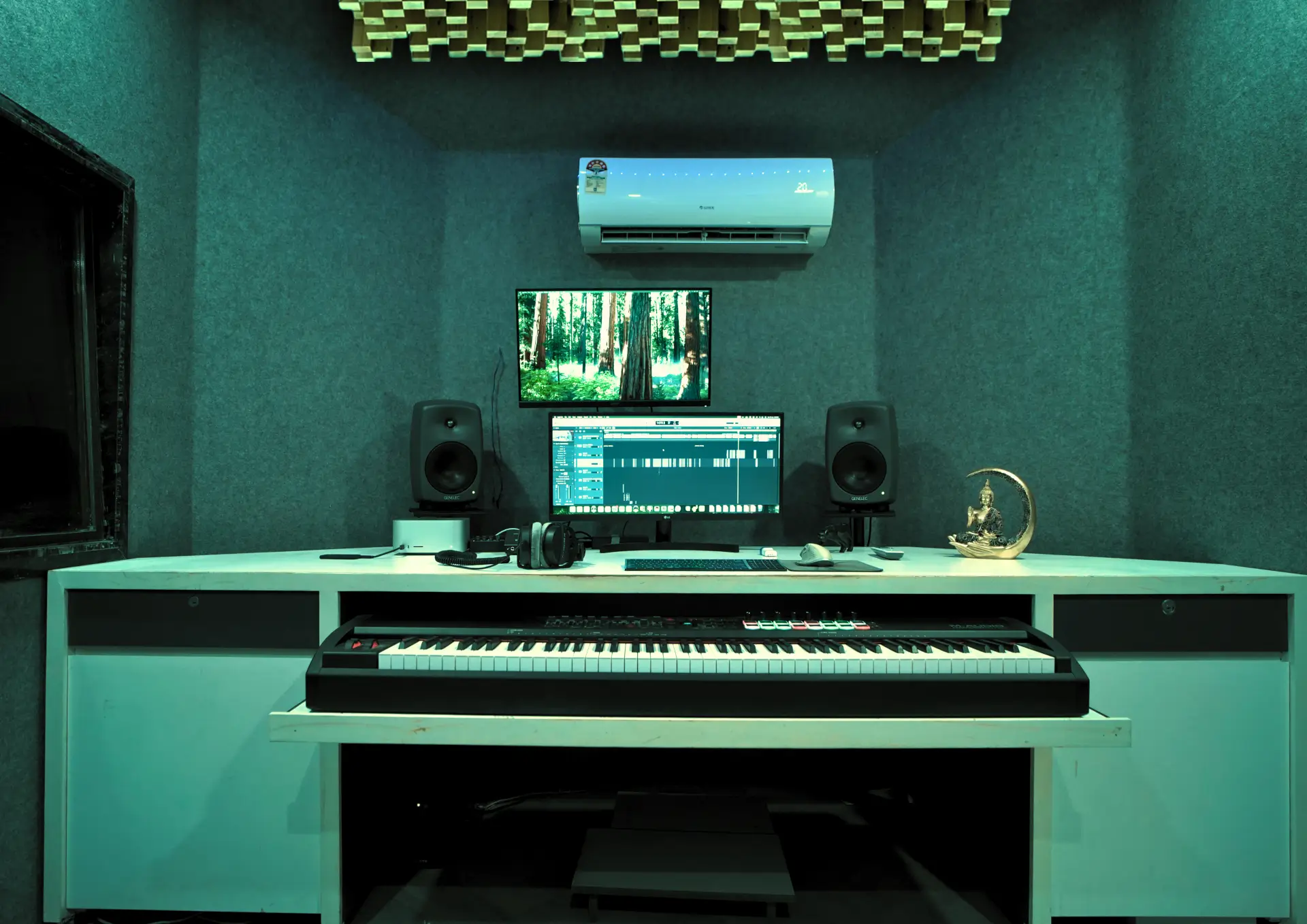
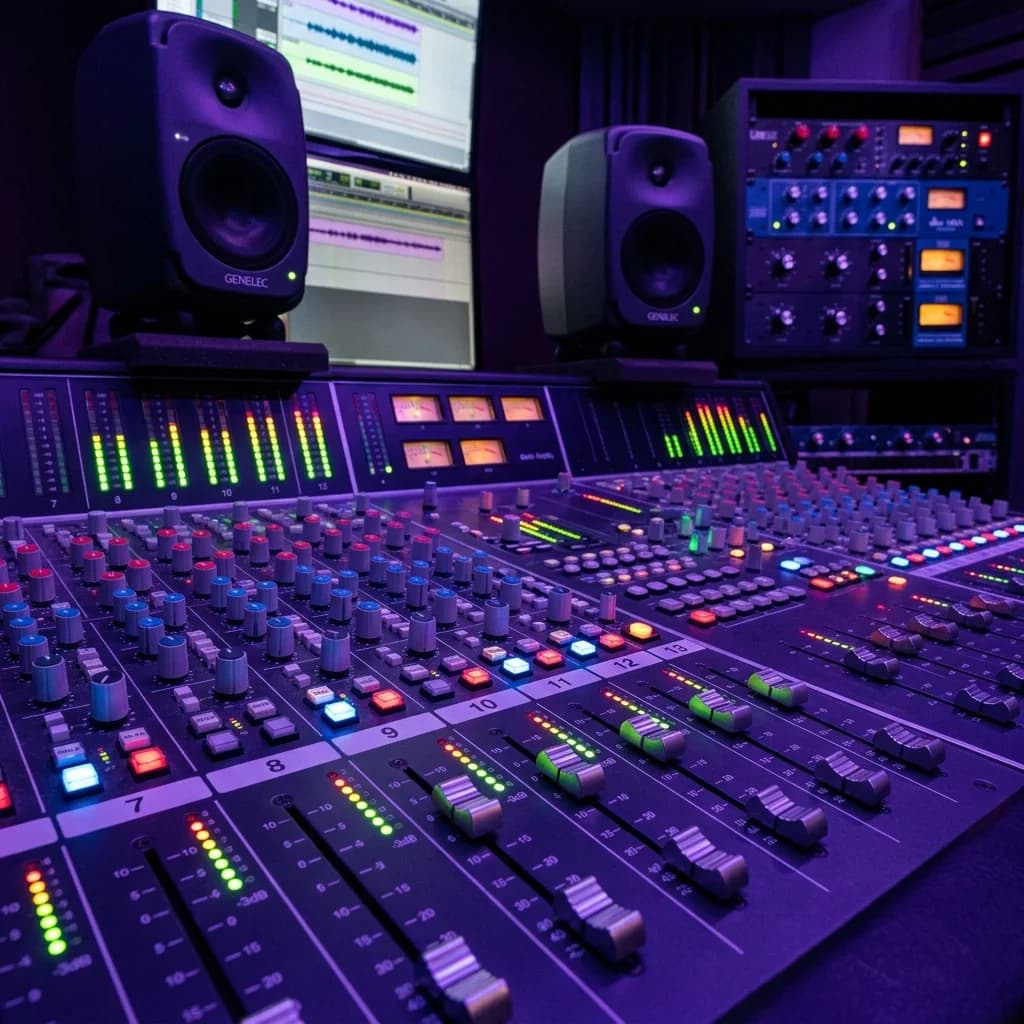
Routed through a calibrated, acoustically treated room with Genelec SAM monitors, we see the sound with total accuracy. There are no frequency blindspots in our studio, meaning your mix will translate perfectly to the outside world.
Ready to transform your rough tracks into a finished masterpiece? Call or WhatsApp us at +91-9602195653. Send us your stems, and let's make your music sound expensive.